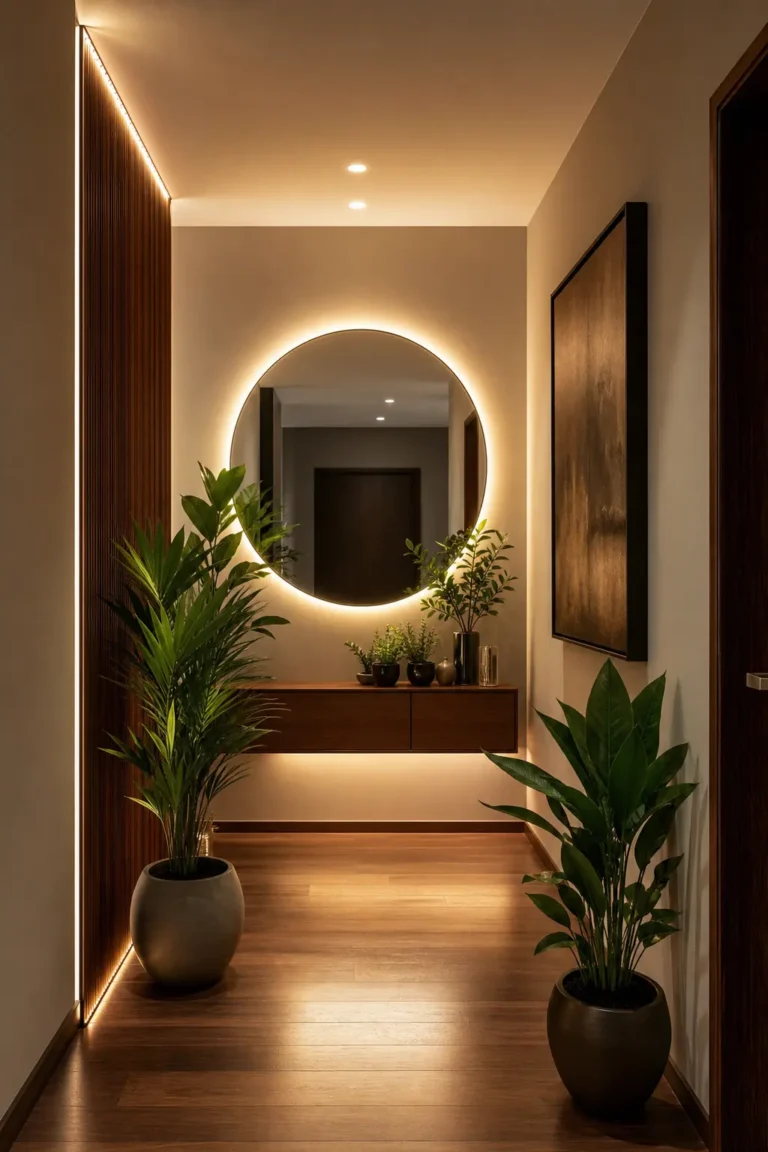
10 Modern Green Living Room Decor Ideas With Plants and Scandinavian Japandi Inspiration
Your living room has good bones, but something’s missing. It feels sterile, a little too matched, more like a showroom than a home. Adding plants sounds like the obvious fix, but one lonely fern on a shelf won’t do much on its own. Real green living room decor is about layering plants, natural materials and calm lines together, borrowing from both Scandinavian and Japandi design. This guide walks through ten specific ways to build a green living room decor scheme that feels alive without feeling cluttered.
1. Pick a Base Green That Works With Natural Light
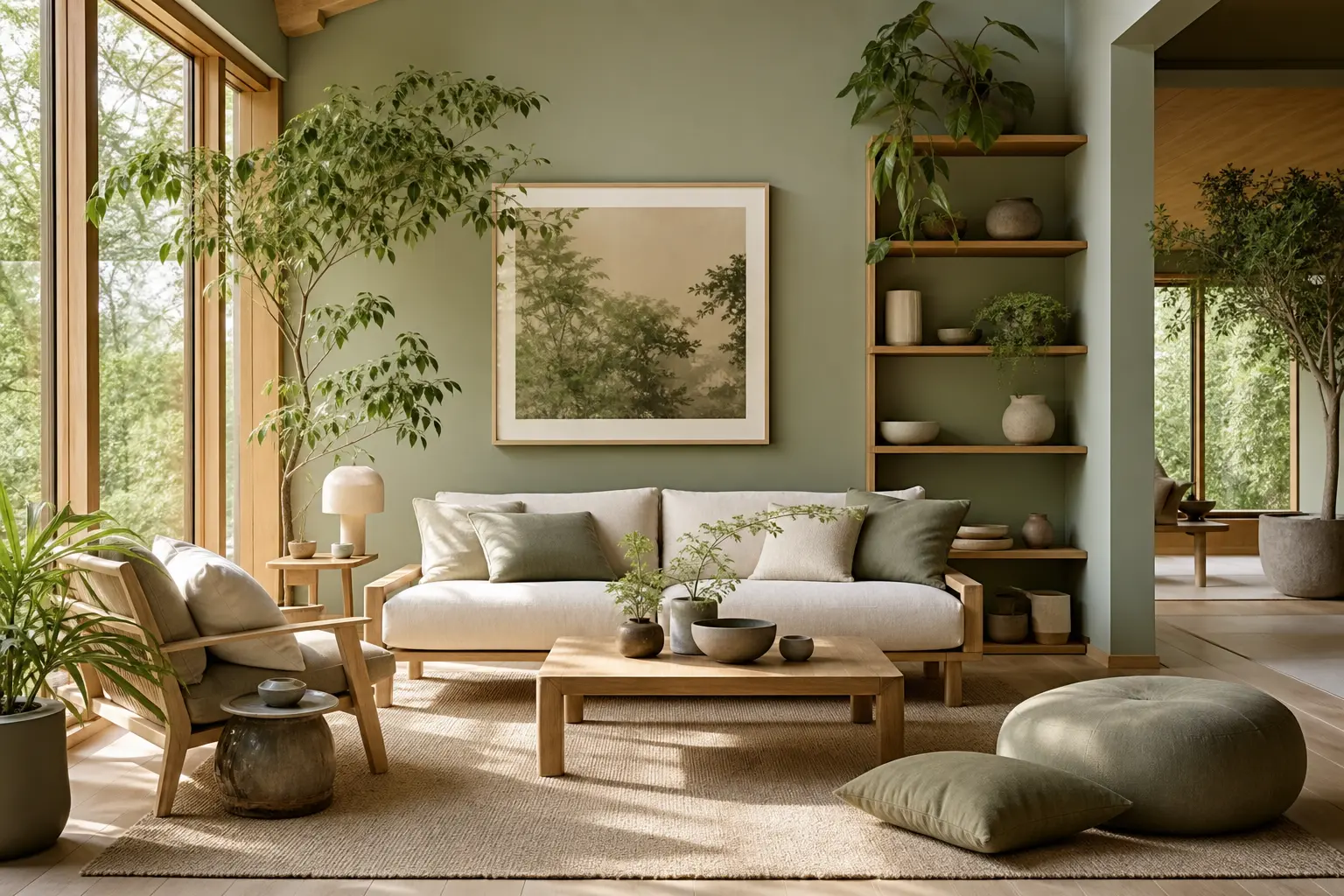
Green is a tricky color to build a room around because it shifts dramatically under different light. A sage or olive green reads warm and grounded in a room with lots of natural light. The same shade can look muddy or dull in a north facing room with less sun. Test a swatch on the wall you’re most likely to paint and watch it over a full day before committing. If you’re not ready to commit to green walls, start smaller. A single green accent chair or a set of green ceramic vases can carry the color just as well.
Which Green Undertone to Choose
Sage and olive both lean slightly gray, which pairs well with Scandinavian white oak. A more saturated forest green works better in a Japandi room with darker wood accents.
2. Mix Real and Faux Plants for Low Maintenance Greenery
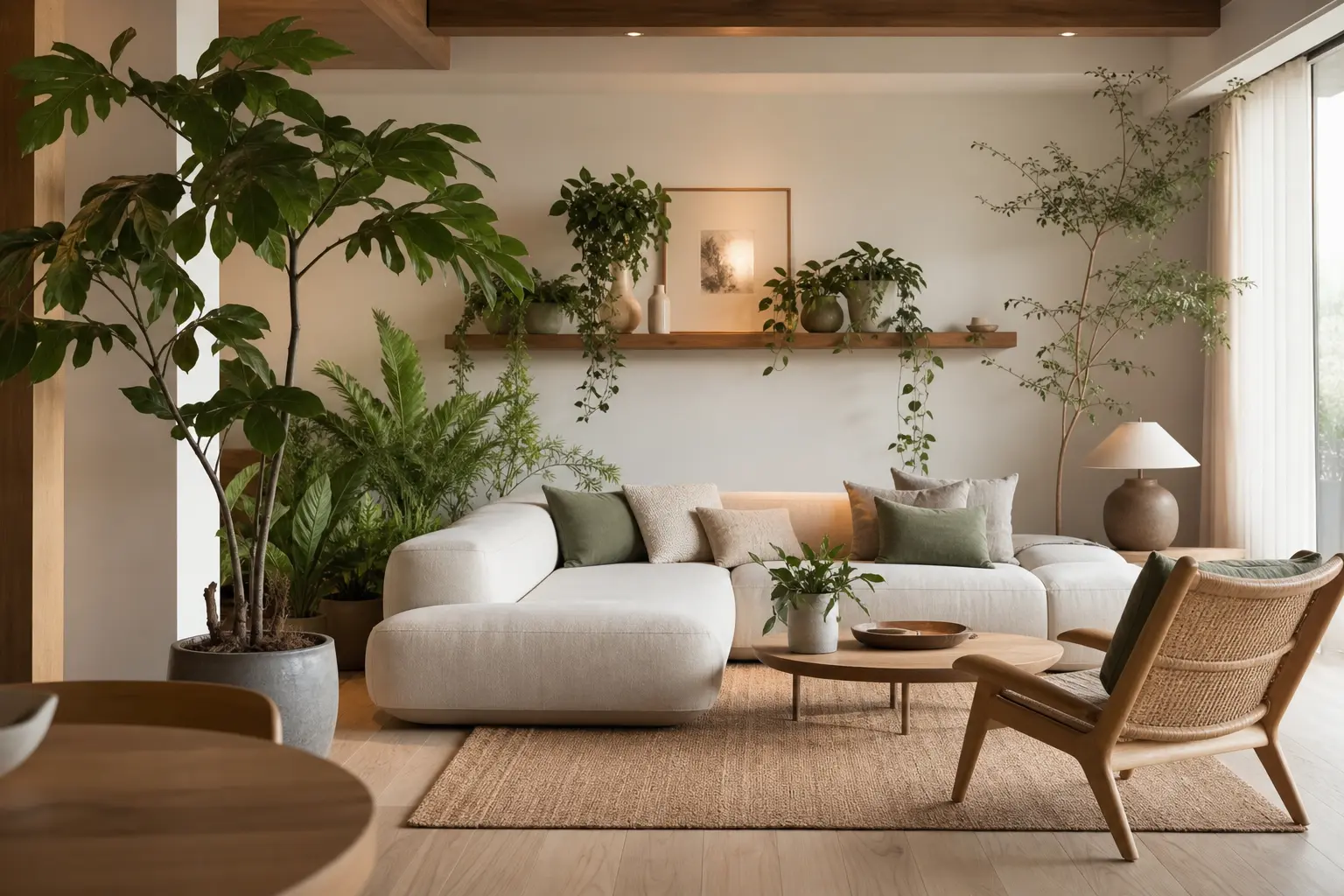
Real plants add life, but not every room has the light or the time commitment they need. Mixing real and faux plants solves both problems at once. Use real, low maintenance plants like a snake plant or a pothos in spots with decent light. Save faux versions for darker corners where nothing real would survive anyway. A well made faux fig or olive tree, styled at the right height, is genuinely hard to spot as fake from across the room. Nobody needs to know which is which for the room to feel green and alive.
3. Bring in Scandinavian Wood Tones for Warmth
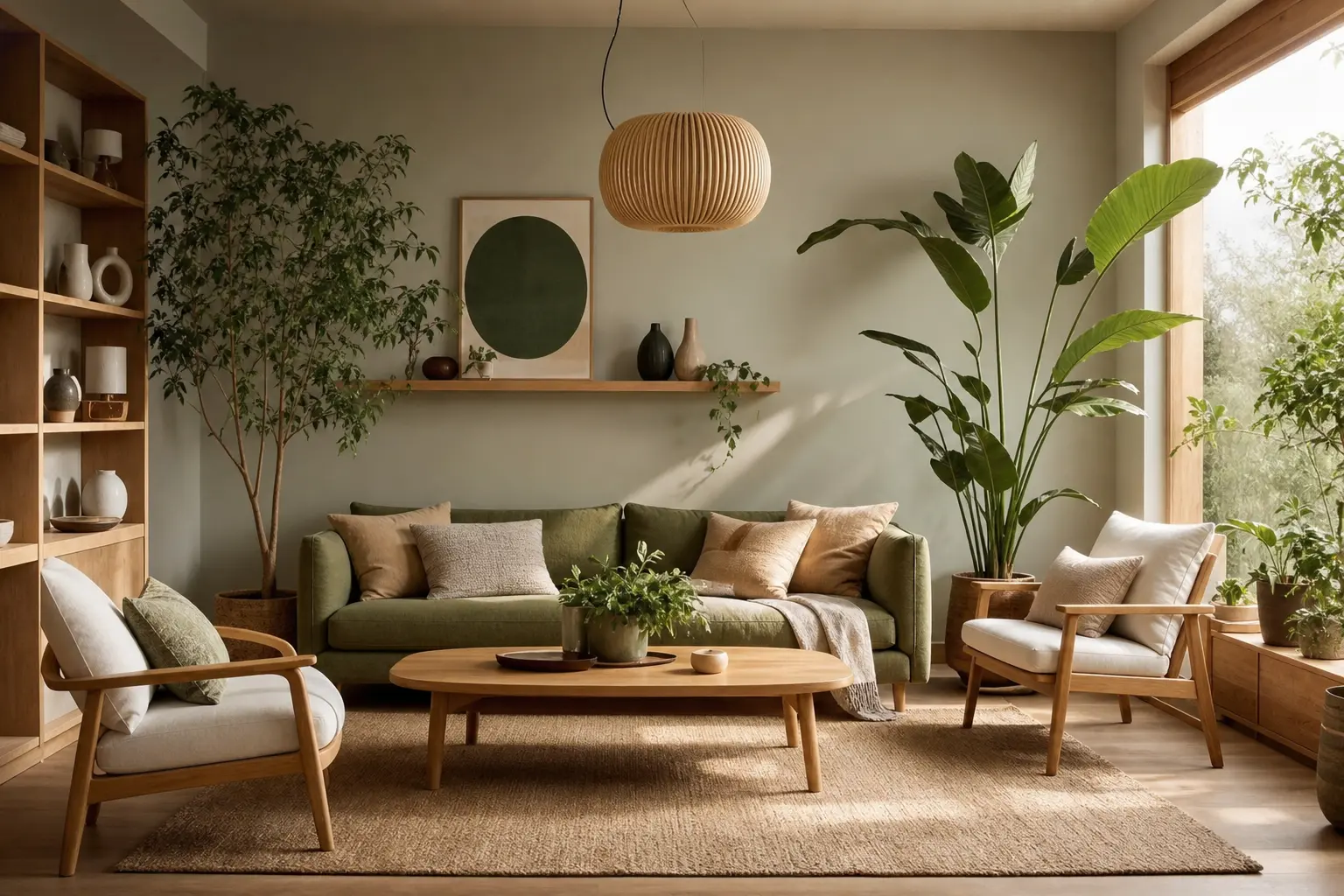
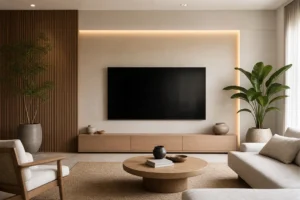
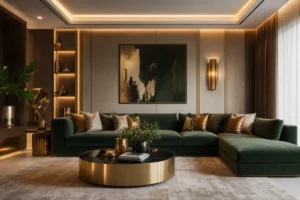
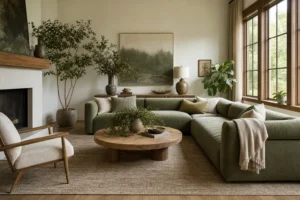
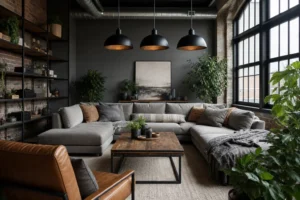
Scandinavian design leans on pale, warm wood, think light oak, birch or ash, to keep a room feeling bright even with darker accent colors in the mix. Pair this wood tone with your green accents for a calm, grounded look. A light wood coffee table or media console works especially well against darker green walls, since the contrast keeps the room from feeling heavy. Stick to one or two wood tones throughout the room rather than mixing several, which can start to look unplanned.
4. Add Japandi Balance With Clean Lines and Negative Space
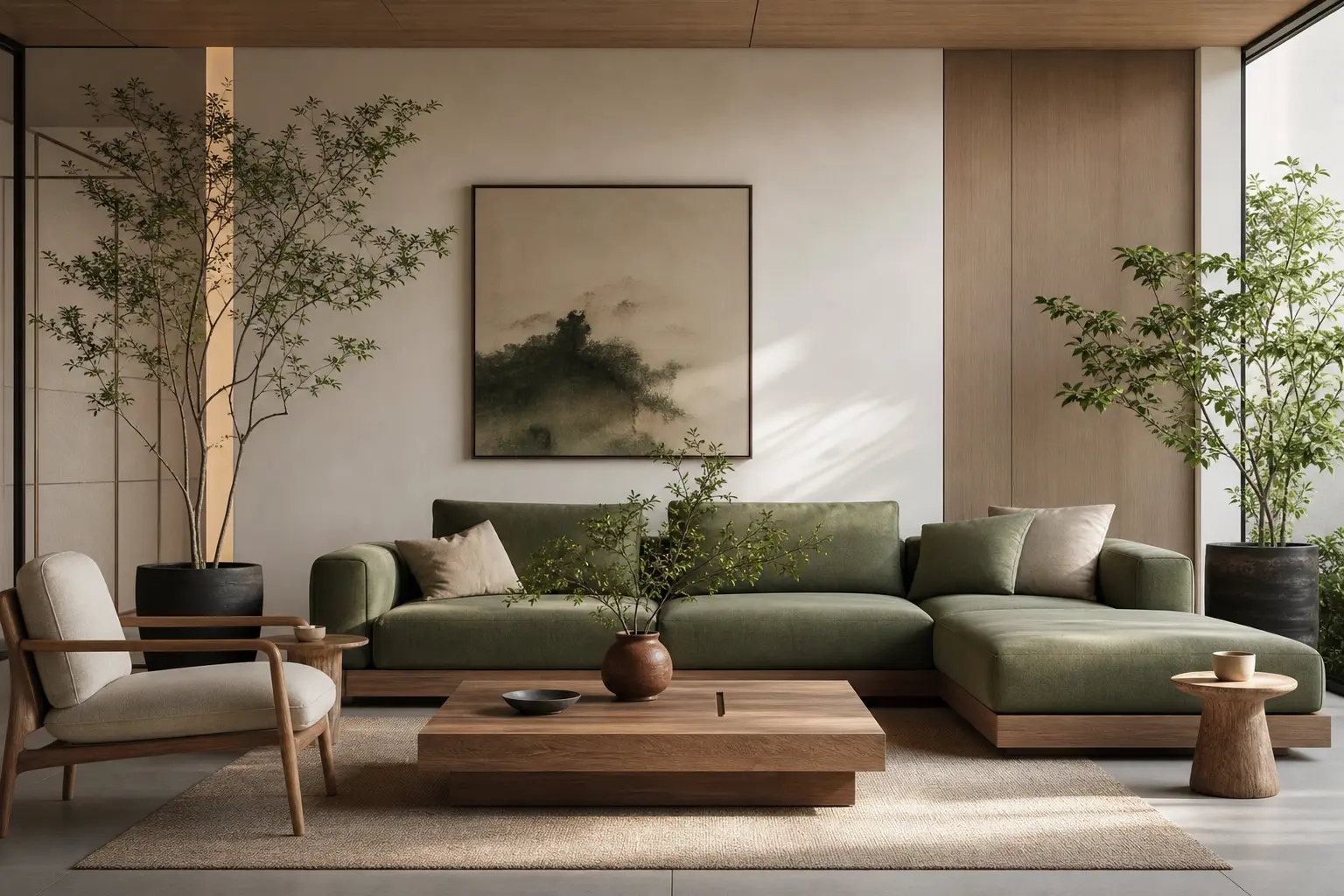
Japandi blends Japanese minimalism with Scandinavian warmth, and the easiest way to bring it into a green living room decor scheme is through negative space. Don’t fill every surface. Leave visible gaps between furniture pieces and let the floor show in places. Choose furniture low to the ground, since low seating is a hallmark of Japanese interiors and pairs naturally with the relaxed feel of Scandinavian style. A few clean lined pieces, spaced out with intention, will do more for the room than a dozen small decorative objects.
5. Choose a Textured Neutral Sofa as Your Anchor Piece
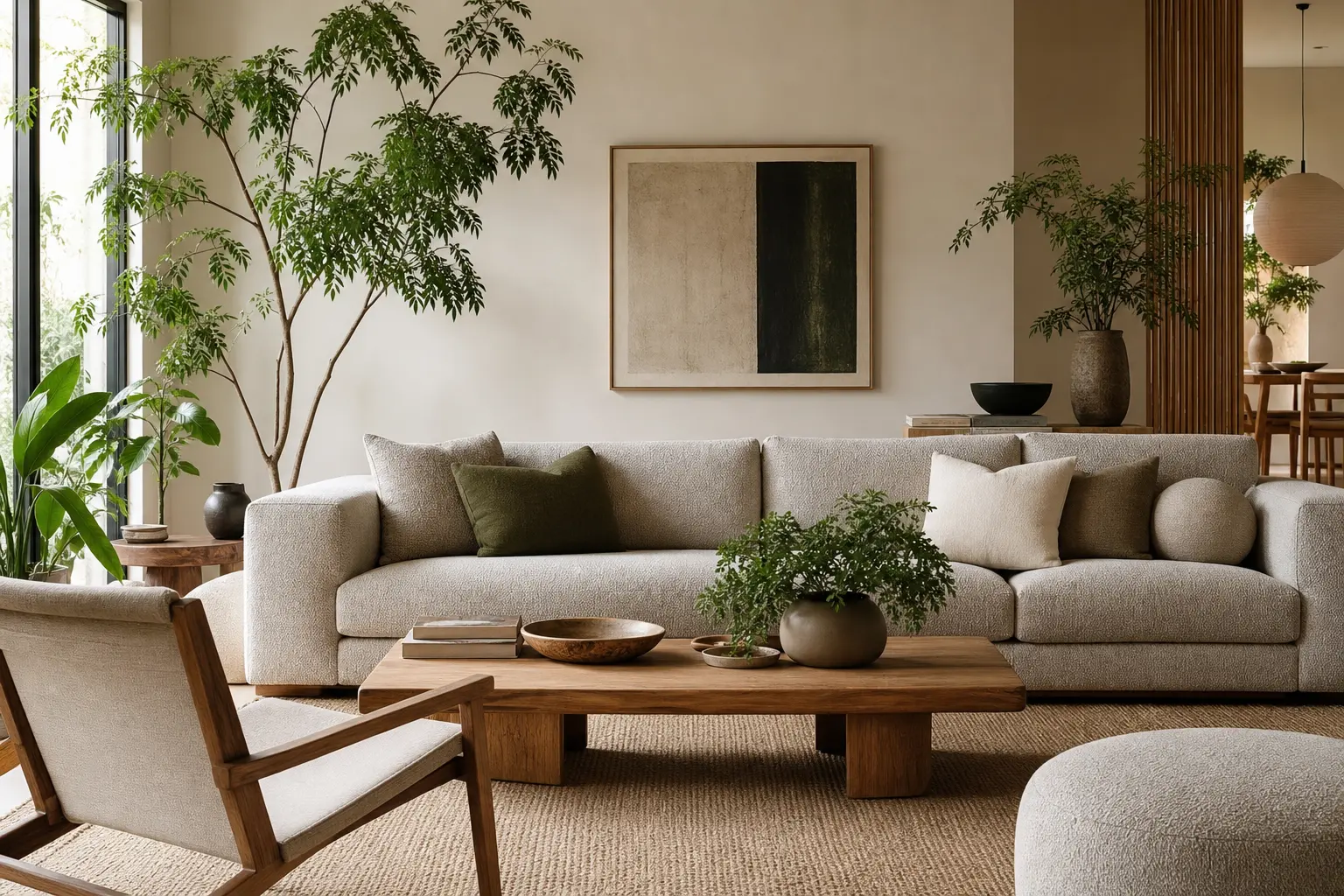
Your sofa is the largest piece of furniture in the room, so it needs to support the green accents rather than compete with them. A neutral sofa in linen, boucle or a nubby weave gives the green plants and accessories somewhere calm to stand out against. Avoid a green sofa unless you’re confident about matching every other green tone in the room to it, since green fabric can clash with plant foliage more easily than you’d expect.
6. Layer Plant Heights for a Layered, Natural Look
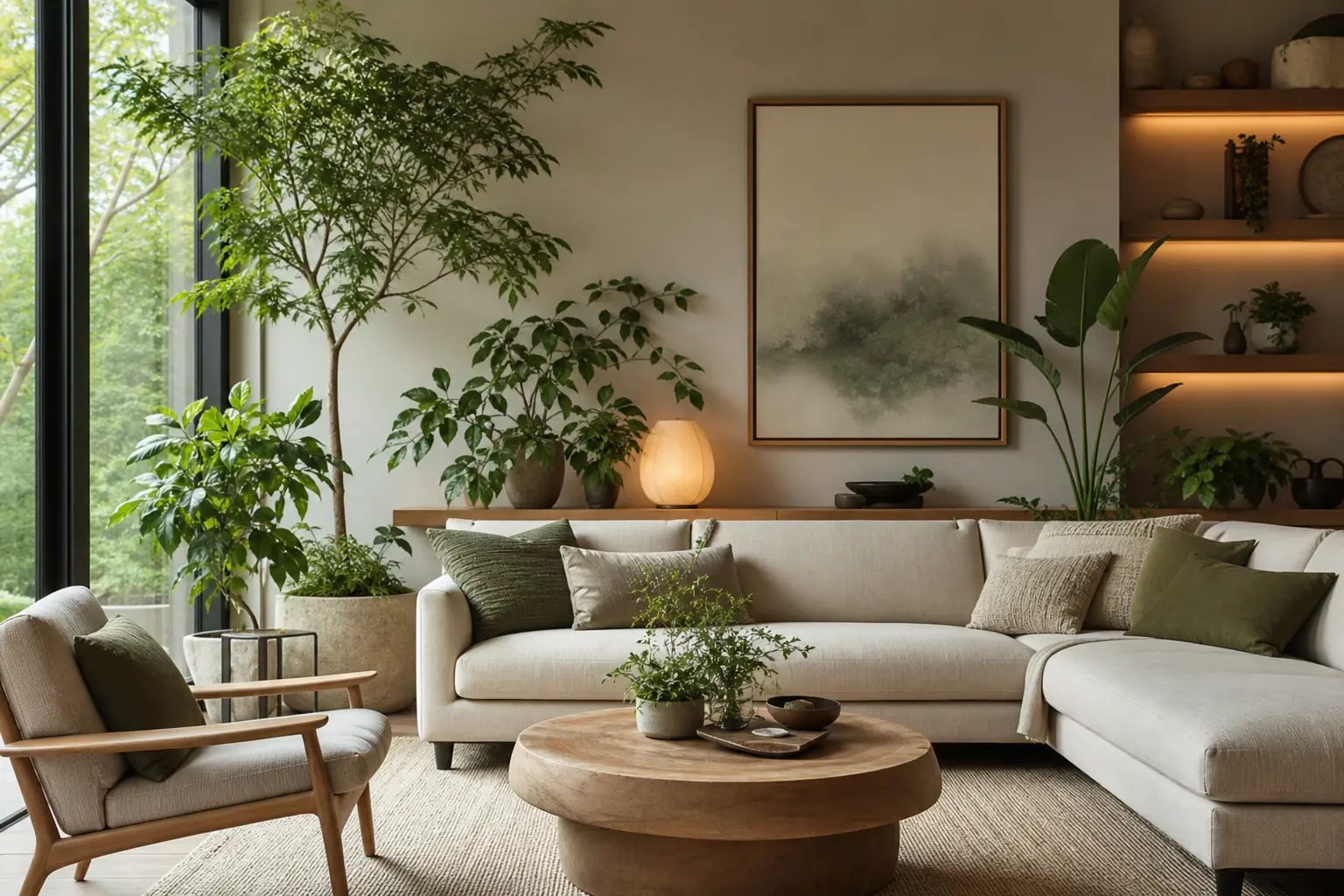
A row of plants all the same height reads as flat, even if the plants themselves are healthy and full. Vary your heights instead. Put a tall floor plant in one corner, a mid height plant on a side table, and a trailing pothos on a high shelf where it can spill down. This layering mimics how plants actually grow in nature and makes the whole room feel more intentional. Three height levels is usually enough for a standard sized living room.
7. Use Woven and Ceramic Planters Instead of Plastic
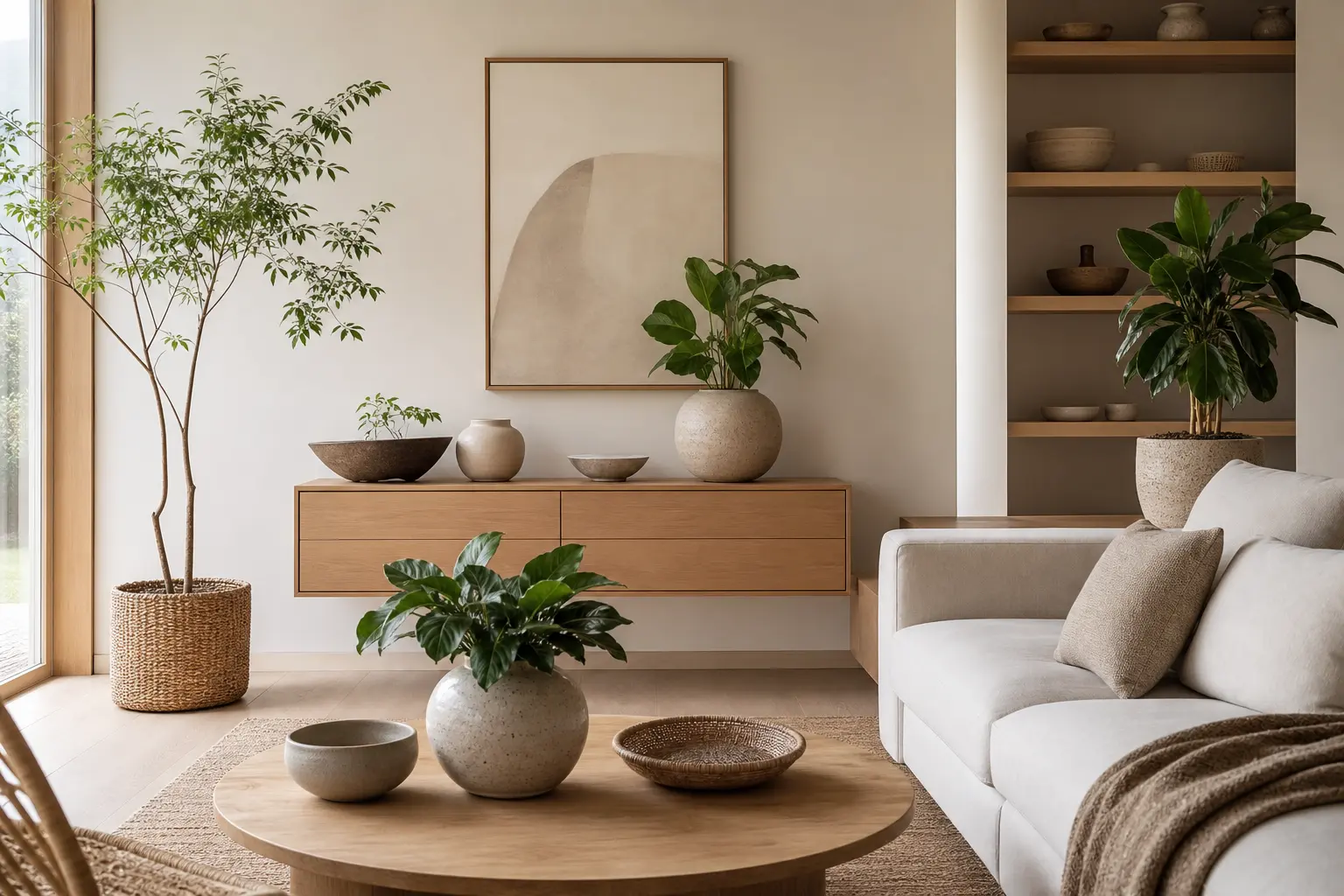
Plastic nursery pots undercut an otherwise well styled room. Swap them for woven rattan baskets, unglazed terracotta, or simple ceramic planters in a matte finish. These materials tie back into both the Scandinavian and Japandi references running through the rest of the room. If budget is tight, you don’t need to replace every pot at once. Start with the plants in your main sightline, the ones visible from the doorway or the sofa.
8. Add Natural Light Wherever Possible
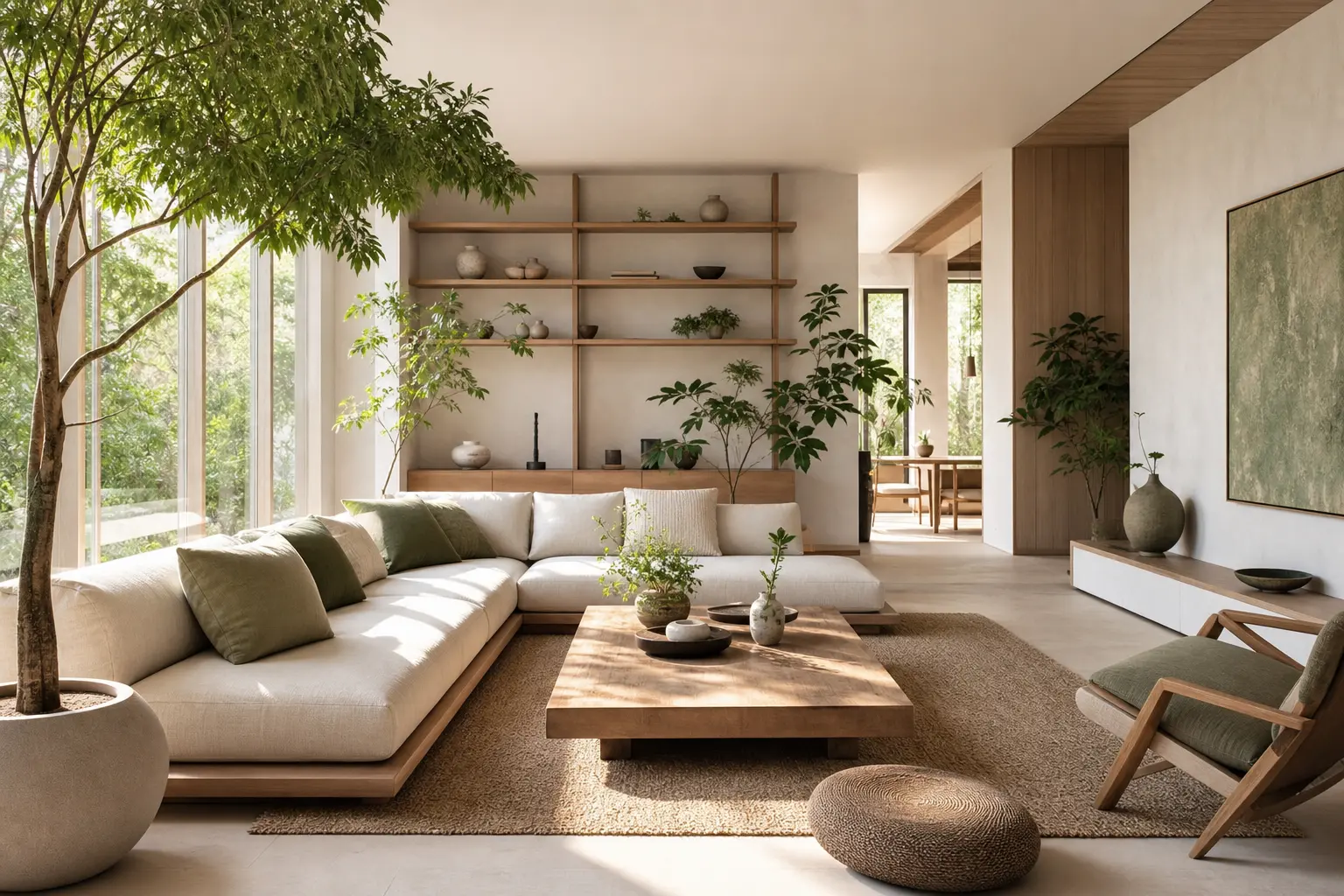
Plants and natural light go hand in hand, and this matters for the room’s overall feel, not just plant health. Keep window treatments light and sheer rather than heavy and dark. Move furniture away from blocking windows where you can. If a room genuinely lacks natural light, lean harder on faux plants and supplement with a warm grow light disguised as a regular floor lamp for the plants that do need real sun.
9. Bring Green Into Textiles, Not Just Plants
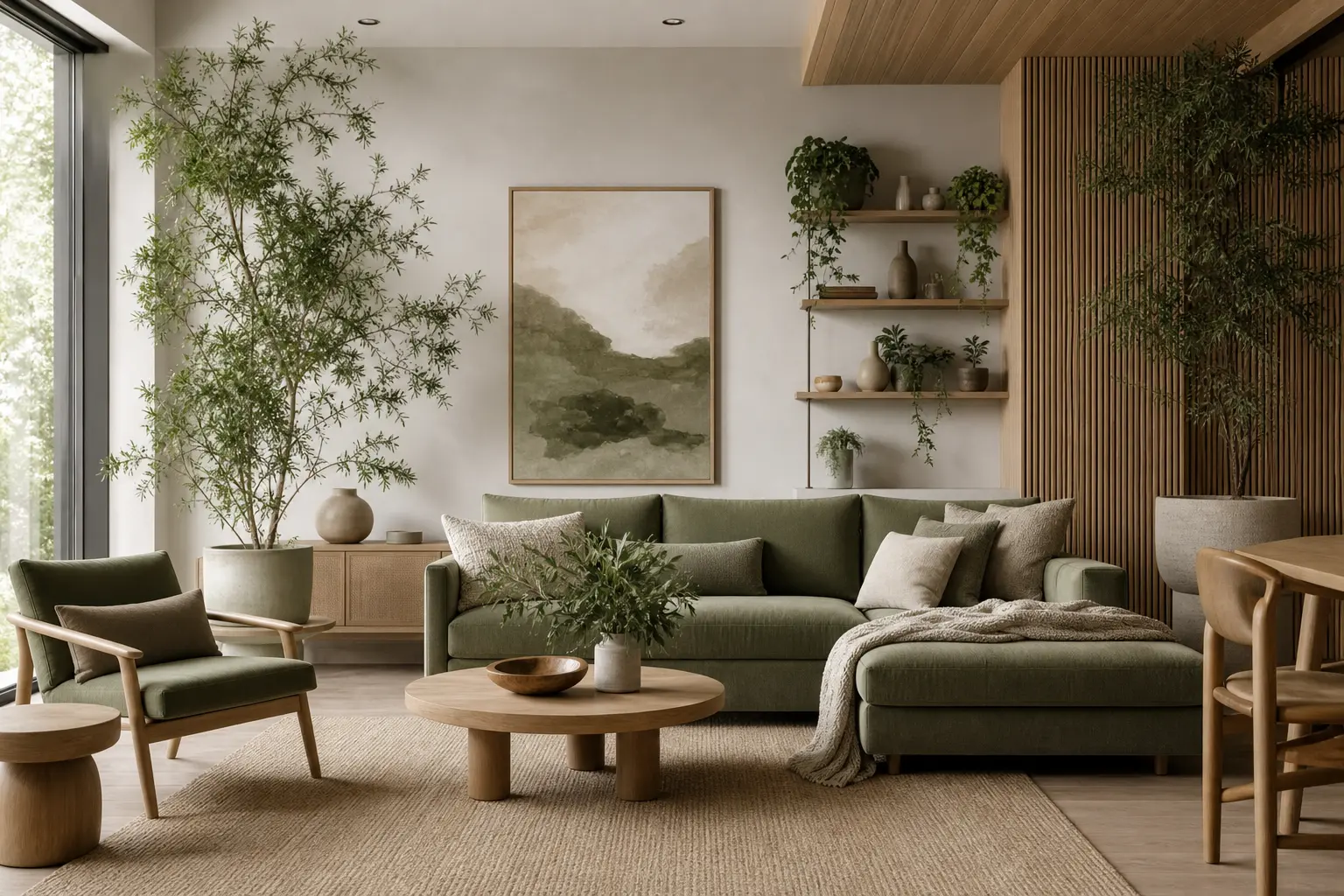
Plants alone can start to feel like an afterthought if the rest of the room ignores the color completely. Bring green into a few textiles too. A throw pillow, a woven pouf, or a table runner in a muted sage tone ties the plant life into the broader palette. Keep this to two or three textile touches maximum, so the green still reads as intentional rather than scattered.
10. Finish With One Bold Botanical Print or Art Piece
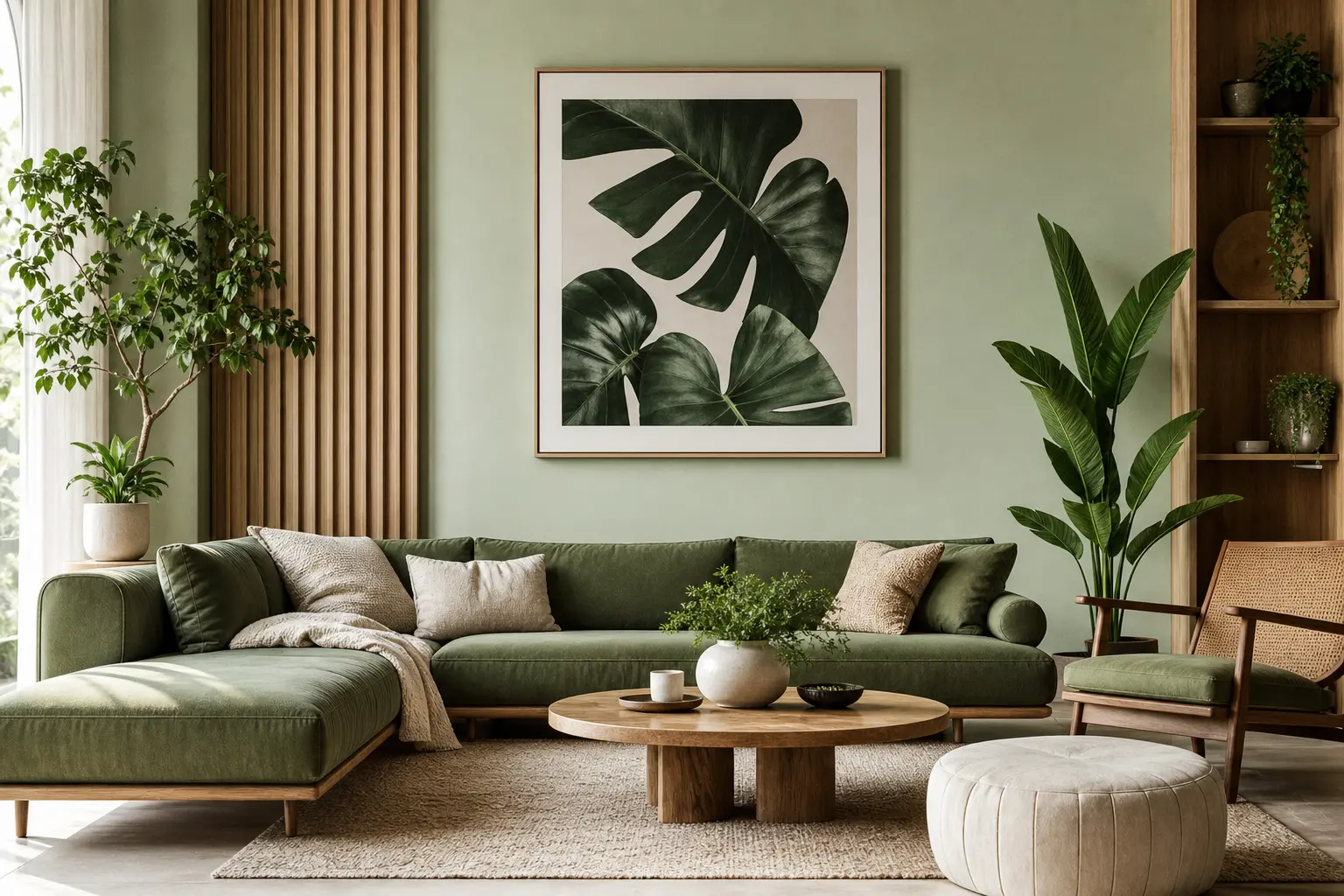
A single botanical print or piece of leaf patterned art gives the room a focal point that echoes the plants without adding more greenery itself. Choose one wall for this, usually above the sofa or console, and keep the rest of the walls simple. A large scale print tends to read as more considered than several small ones grouped together.
Mistakes to Avoid
- Choosing a green paint color without testing it in your room’s actual light
- Using only plastic nursery pots, which undercuts the rest of the styling
- Filling every surface and losing the open, Japandi feeling of negative space
- Mixing more than two wood tones in the same room
- Placing every plant at the same height
- Forgetting to bring green into textiles, leaving the plants to do all the work
Frequently Asked Questions
What’s the difference between Scandinavian and Japandi style? Scandinavian design focuses on light wood, white walls and function. Japandi blends that with Japanese minimalism, adding darker wood accents, low furniture and more negative space.
How many plants does a living room need to feel green? There’s no fixed number, but three to five plants at varied heights is usually enough for a standard sized room without feeling like a greenhouse.
Can faux plants really work in a design focused room? Yes. A well made faux plant, especially in a darker corner with poor light, often looks better than a real plant struggling to survive there.
What paint color pairs best with green living room decor? Warm white or a soft off white usually works best, since it keeps the room bright and lets the green accents stand out without competing.
Do I need a lot of natural light for a green living room? It helps, but it’s not required. Faux plants and warm grow lights can fill the gap in rooms with limited natural light.
What wood tone works best with sage green? Light oak or birch, both common in Scandinavian design, pair especially well with sage and other gray leaning greens.
Conclusion
Green living room decor works best when it’s layered, not just added as an afterthought. Start with a few real plants at different heights, bring in light Scandinavian wood, and leave enough negative space for that Japandi calm to come through. You don’t need to overhaul the whole room at once. Add one plant and one wood piece this week, and build the rest of this list in over time.