10 Modern Luxury Living Room Ideas with Floating TV Units & Wood Slat Feature Walls
A TV wall can go one of two ways. It can be an afterthought, a screen bolted to bare drywall with a boxy cabinet shoved underneath, or it can end up being the best designed feature in the whole living room. The difference usually comes down to two choices: a floating media console instead of furniture that sits heavy on the floor, and a textured wood slat wall behind the screen instead of flat paint. Together, those two moves elevate a living room more than almost any other single upgrade, and neither one demands a full renovation. What follows are ten different ways to combine the two, from simple accent walls all the way up to fully custom builds.
Think about the living rooms that look like they belong in a design magazine instead of a furniture showroom. The TV is rarely mounted straight onto bare drywall in those rooms. There’s almost always texture behind it, and the console below tends to float rather than plant itself on the floor. Simple idea, and it makes a real difference once it’s actually sitting in the room.
1. Full Height Wood Slat Wall with a Floating Console
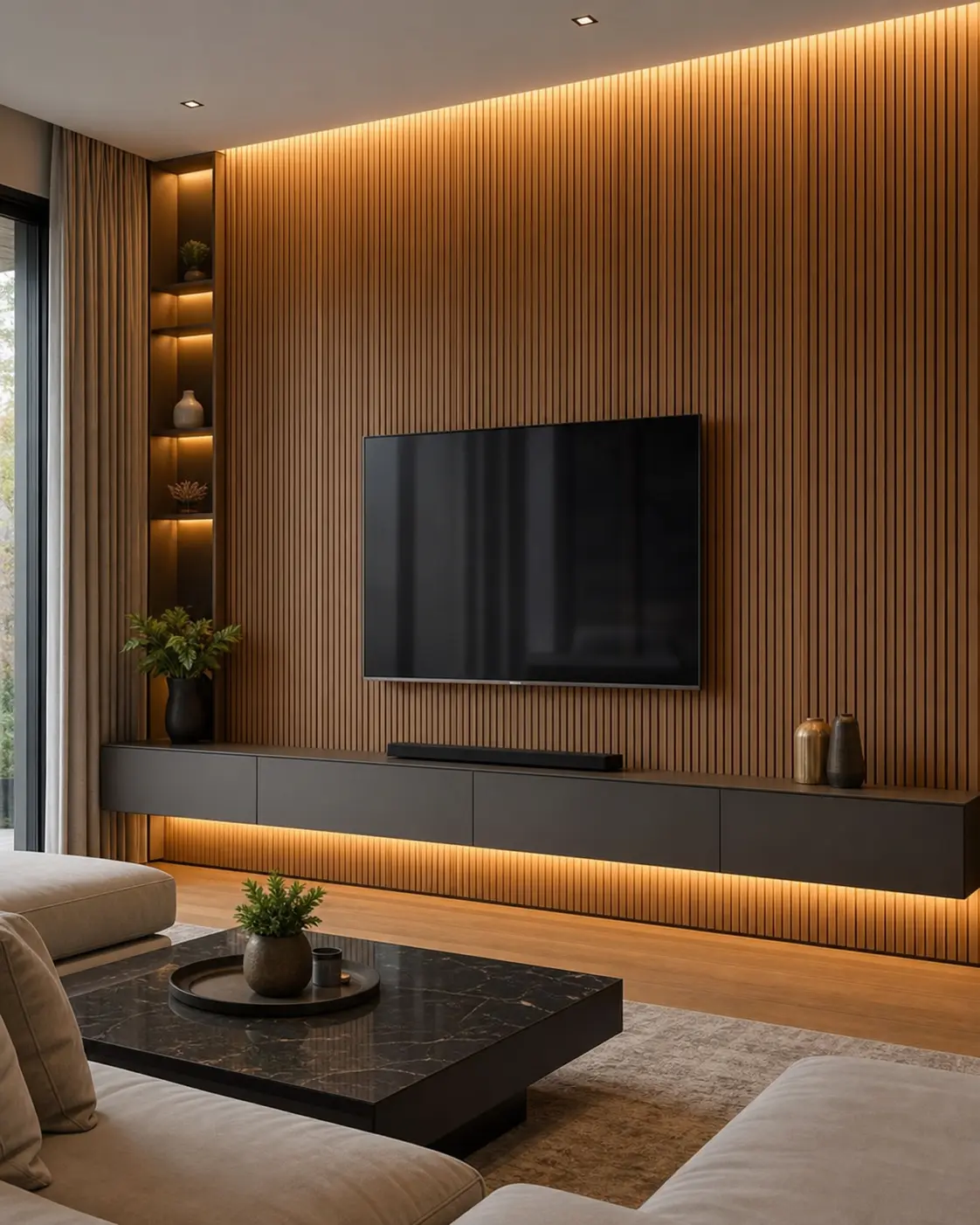
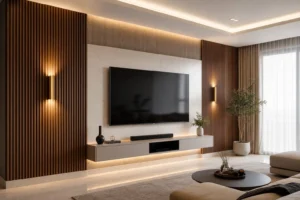
Cover the entire wall behind the TV in floor to ceiling wood slats, then mount a slim floating console below the screen instead of a traditional cabinet. The slats bring texture and warmth across the whole wall, and the floating console keeps the floor visually clear, which makes the room feel bigger even with a large TV anchoring the space. It’s one of the more involved builds on this list, but it turns an entire wall into a single, cohesive statement instead of a TV with some furniture sitting nearby.
2. Two Tone Slat Wall with a Recessed TV Niche
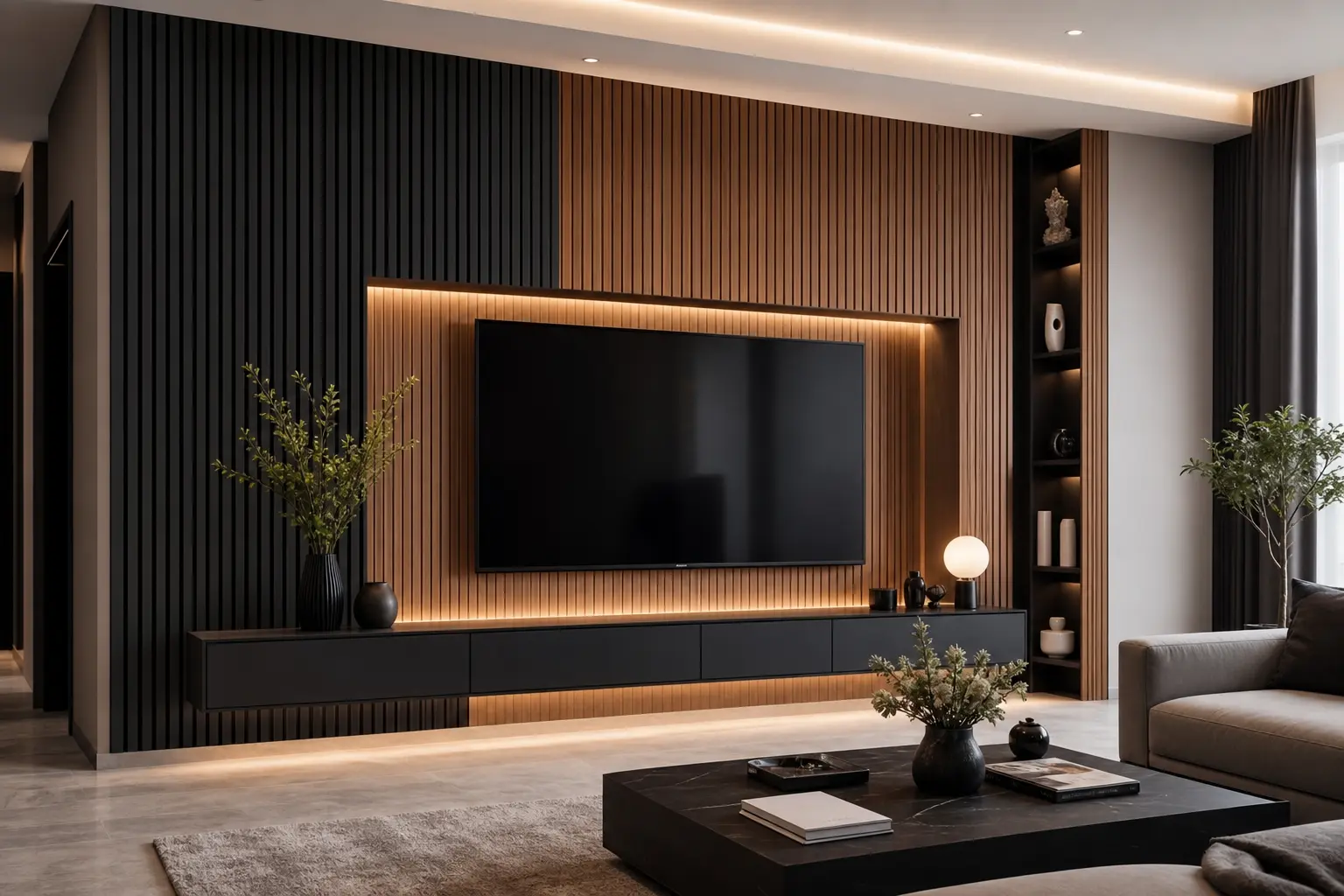
Rather than mounting the TV flat against the slats, build a shallow recessed niche where the screen sits slightly inset from the surrounding wood. Use two slat tones, darker inside the niche, lighter around it, and the contrast pulls the eye toward the screen without needing a bright accent color to do the work. It also helps the TV blend in when it’s off, since the recessed frame reads as intentional design rather than a flat black rectangle stuck on the wall.
3. Floating Console with Integrated LED Uplighting
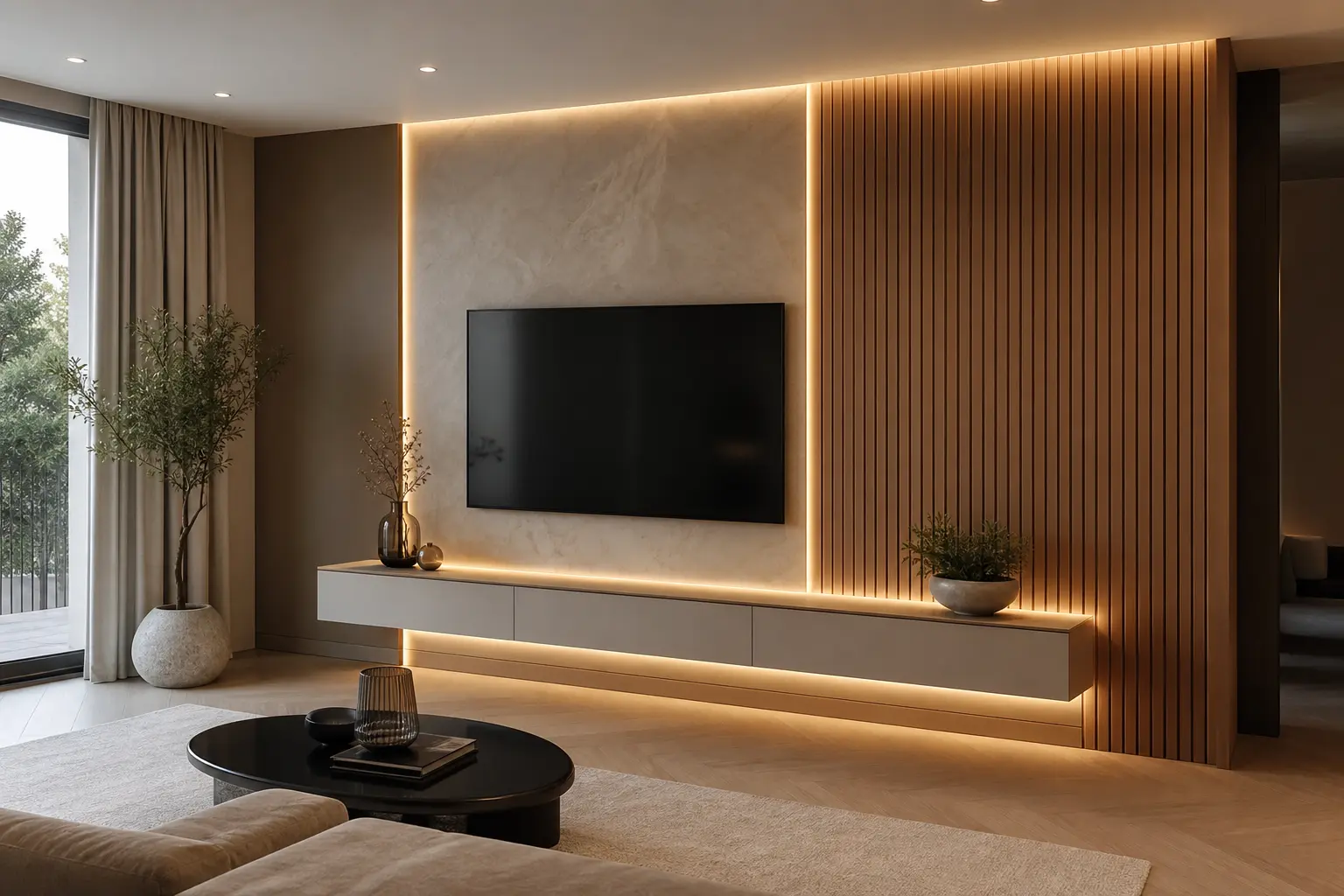
Mount a floating console with a thin LED strip along its underside, angled to wash light down the wall below instead of just lighting the console itself. At night, this makes the console appear to hover even more convincingly than the floating design alone manages. Keep it on a dimmer, though. Full brightness under the console starts to feel more like a display case than a piece of living room furniture.
4. Vertical Slat Wall with a Minimal Black Console
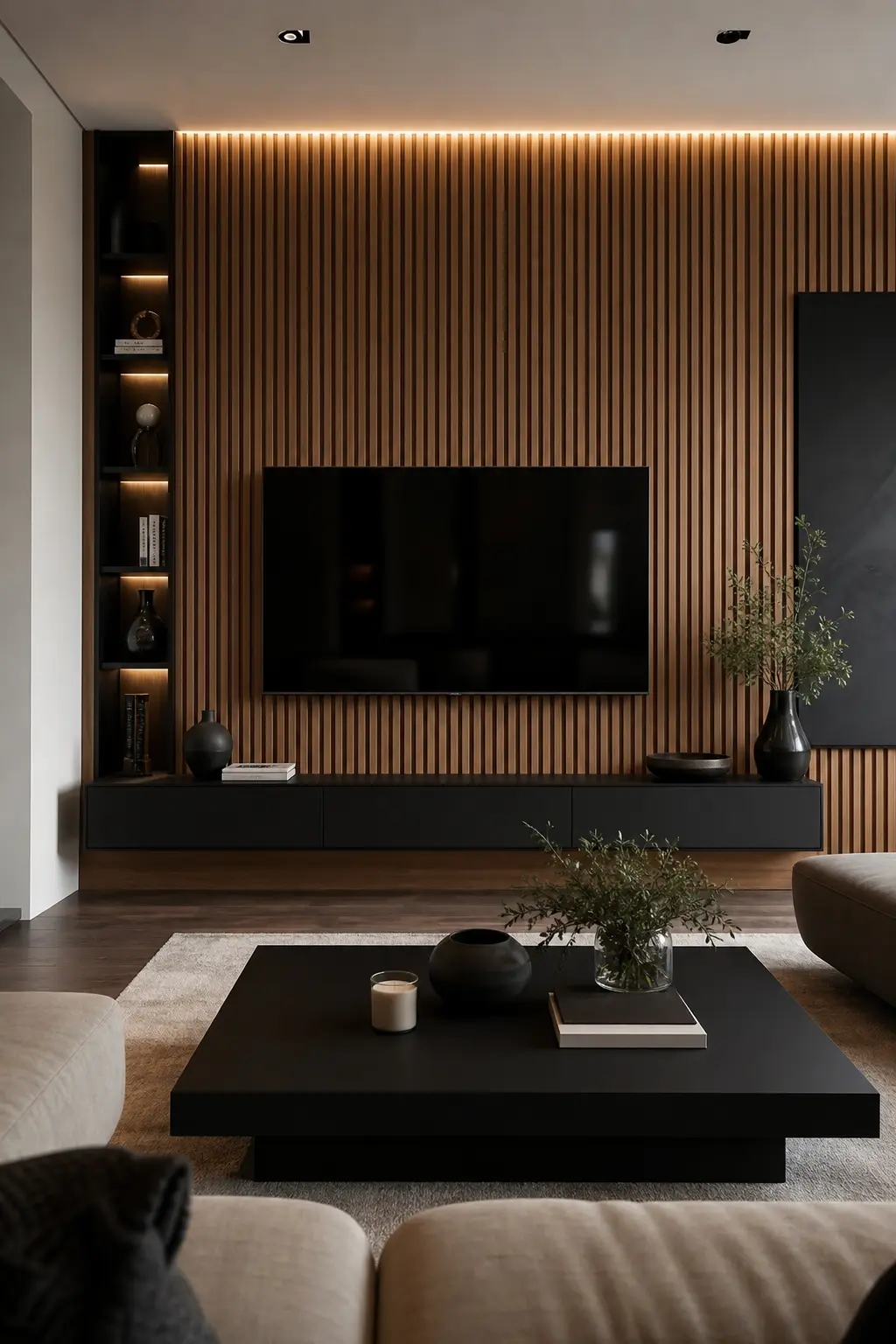
Pair warm wood slats with a matte black floating console, and you get a strong, contrasting look that reads as more masculine and architectural than an all wood palette would. The black console also tends to visually disappear more than a wood one, letting the slat wall behind take center stage. This suits living rooms already leaning toward a modern, minimal furniture style, rather than a room full of warmer, traditional pieces.
5. Wraparound Slat Wall Extending onto the Ceiling
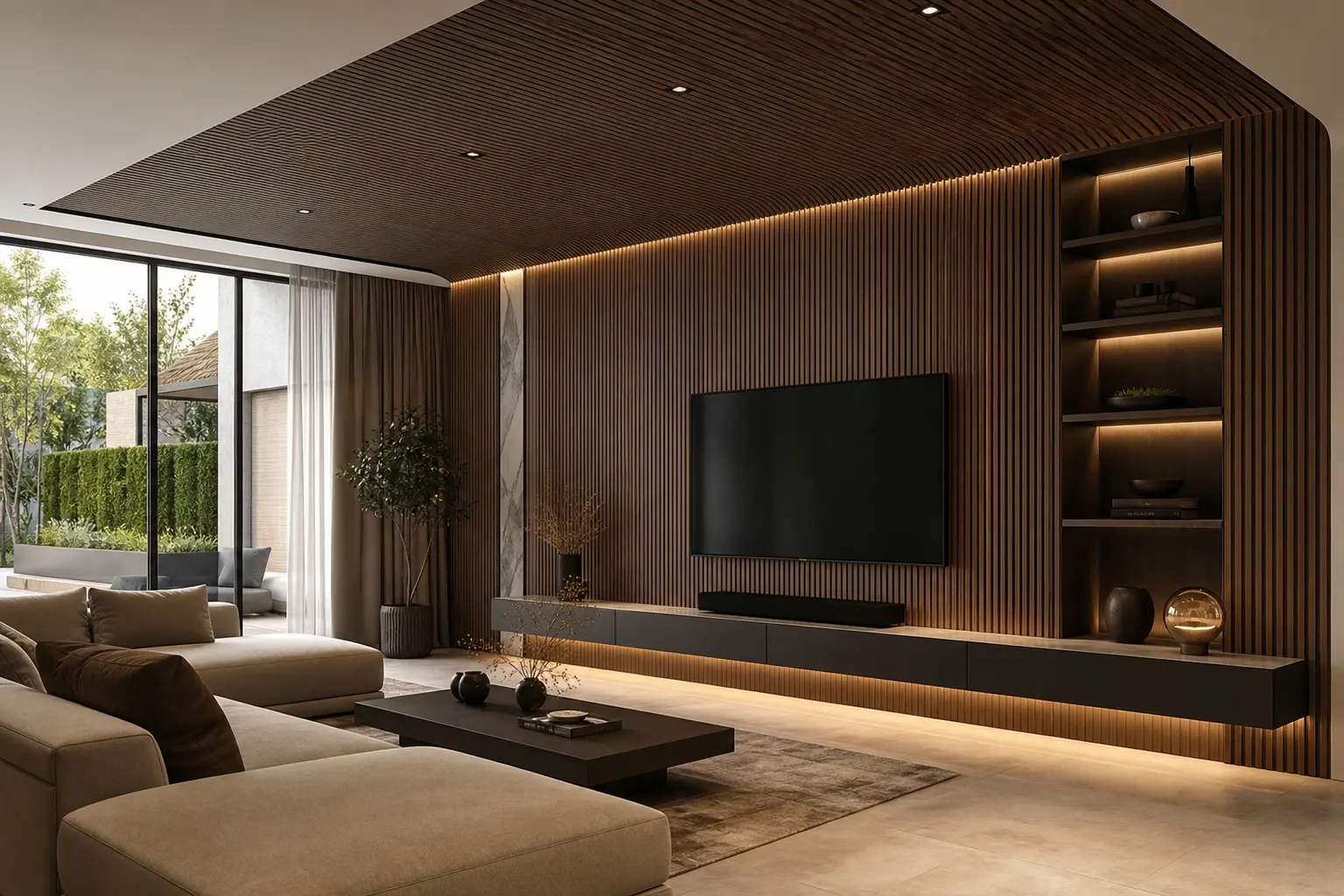
For something more dramatic, extend the wood slats from the wall up and across a portion of the ceiling directly above the TV. This wraparound treatment adds a sense of enclosure a flat wall alone can’t achieve, almost framing the media area the way a canopy frames a bed. You’ll want a room with real ceiling height for this, generally 9 feet or more, since a lower ceiling makes the wraparound feel like it’s closing in rather than adding drama.
6. Floating Console with Hidden Cable Management
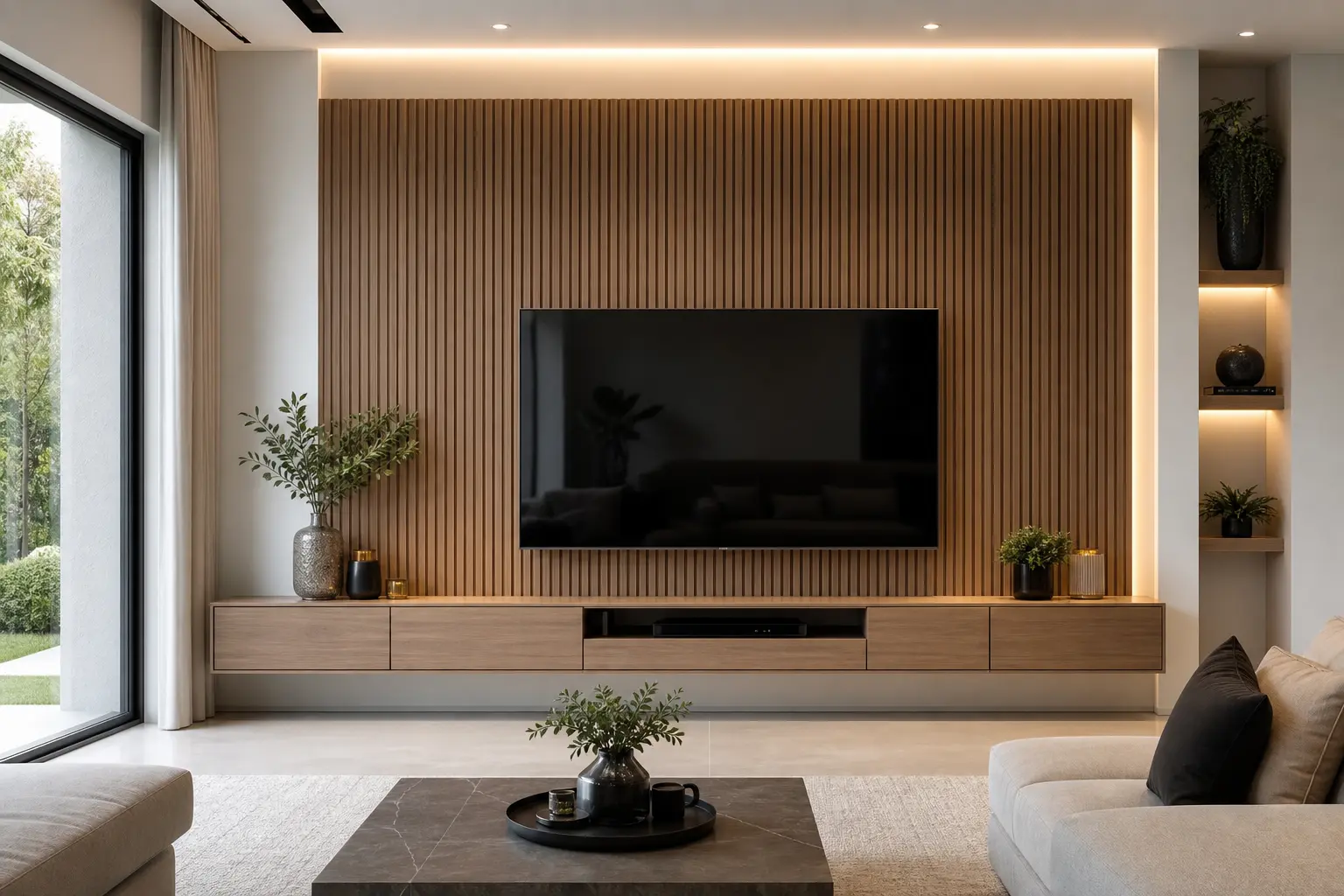
A floating console loses most of its clean, weightless look the moment cables are visible running down to an outlet below it. Route cables through a hidden channel built into the wall, whether that’s a simple in wall conduit or a more finished recessed channel behind the slats, and the console holds onto its floating illusion. This detail matters more than people expect. Even a beautifully designed floating unit looks unfinished with a tangle of cords hanging underneath.
7. Slat Wall with a Symmetrical Shelving Pair
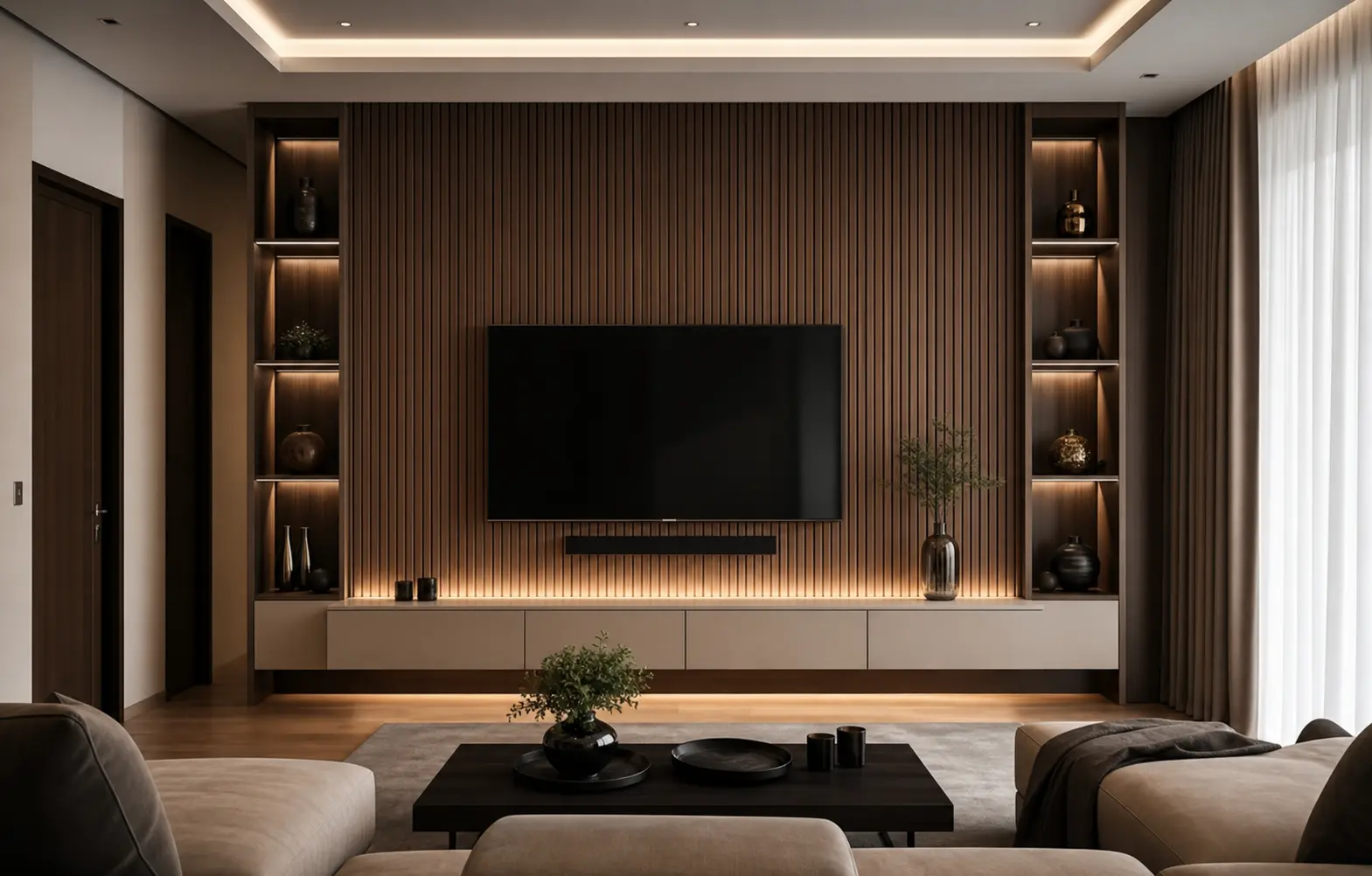
Flank the TV and slat wall with a matching pair of floating shelves, one on each side at the same height, for storage and display space without breaking the wall’s symmetry. Style each shelf the same, or close to it. Mismatched styling on either side throws off the balance the symmetry is supposed to create. This one suits living rooms that already lean formal and structured, rather than an eclectic mix of furniture.
8. Warm Wood Slats Paired with a Stone Console Base
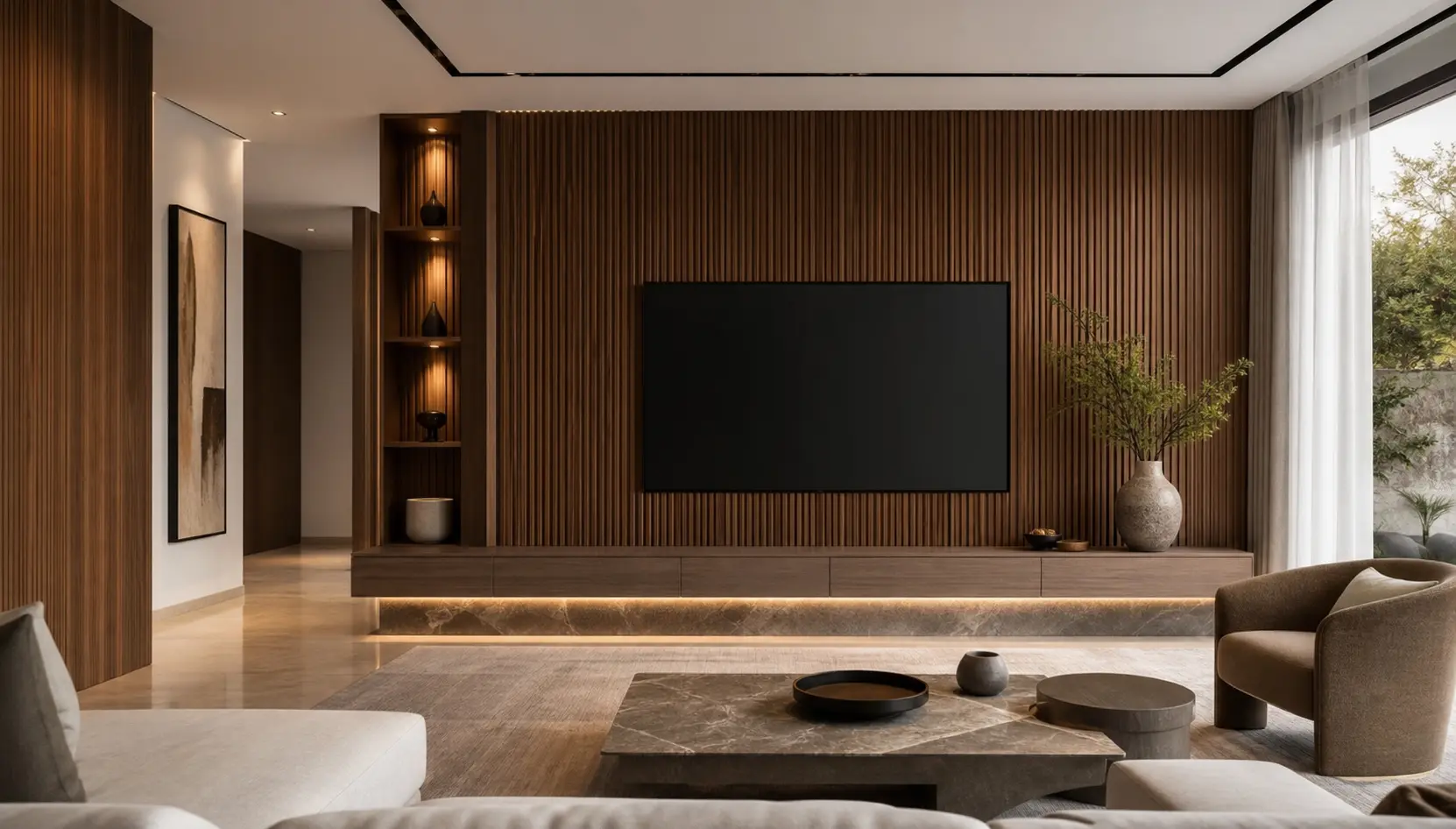
Instead of a fully floating console, build one with a stone or concrete base that appears to float thanks to a shadow gap underneath, paired with warm wood slats behind. Stone and wood bring two different textures into the same wall, and the shadow gap keeps the heavier stone material from feeling as visually weighty as it would sitting flush on the floor. Living rooms with other stone or concrete elements nearby, a fireplace surround, a countertop, suit this best, so the materials feel connected instead of randomly introduced.
9. Slat Accent Behind an Asymmetrical Floating Unit
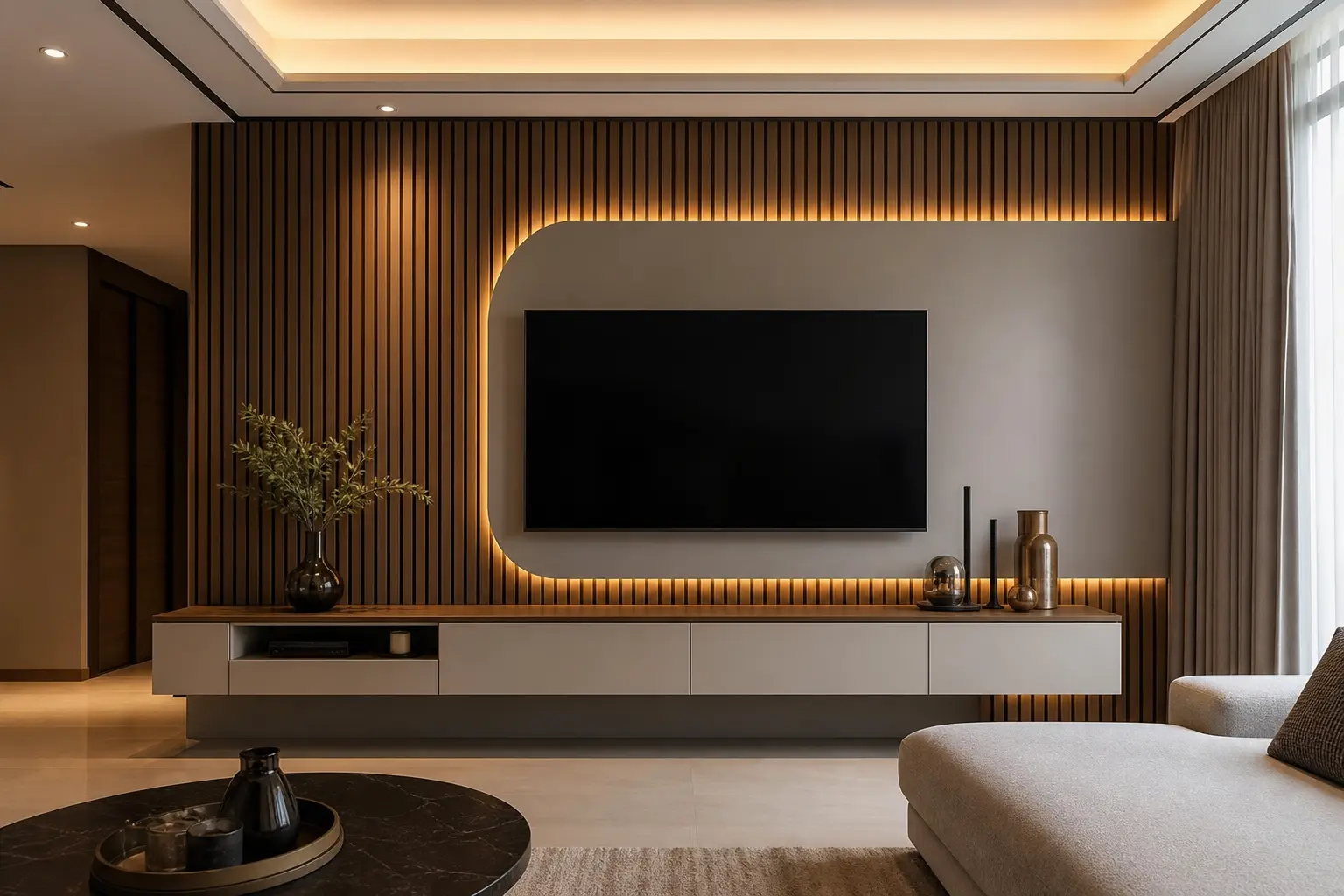
Skip centering the console beneath the TV and offset it slightly to one side instead, extending further in one direction than the other. This asymmetrical layout feels more contemporary than a perfectly centered setup, especially paired with an equally asymmetrical slat pattern behind it, say a slat section that’s wider on one side of the screen than the other. It takes more planning to get the proportions right, but it ends up reading as custom rather than like a standard media wall kit.
10. Minimalist Slat Strip with a Slim Floating Shelf
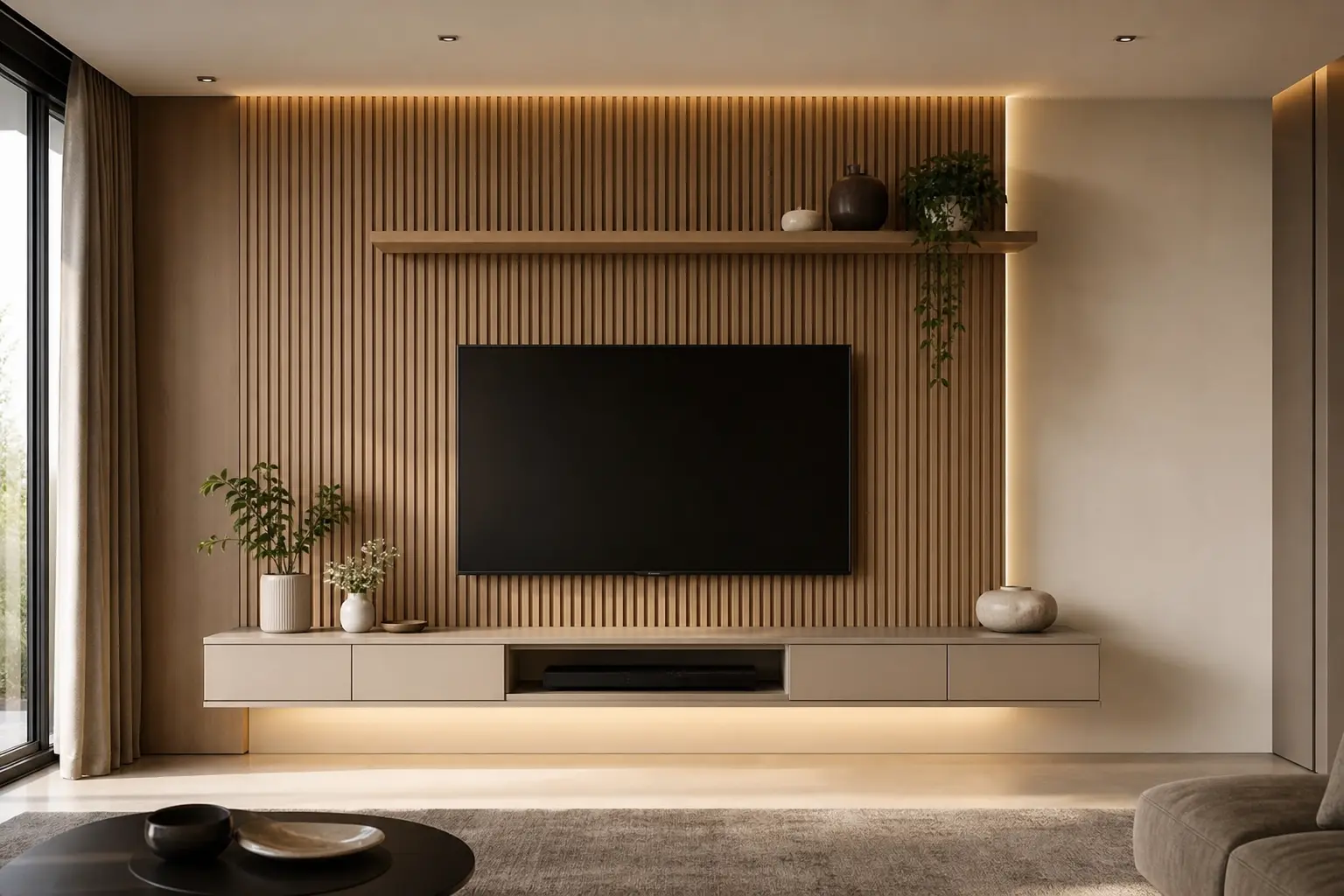
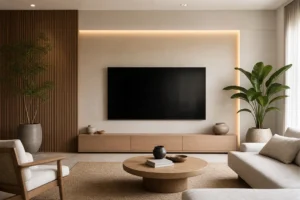
For a smaller scale version, run a narrow band of wood slats just behind and slightly wider than the TV itself, paired with one slim floating shelf below instead of a full console. Smaller living rooms or apartments benefit most here, where a full floor to ceiling slat wall would feel like too much for the space. It’s also the least expensive and quickest option on this list, needing only a partial section of slats and one shelf to finish.
Mistakes to Avoid
- Choosing a floating console too small for the TV size above it, which throws off the visual balance of the whole wall
- Skipping proper wall anchoring for a floating console, risking it sagging or pulling away from the wall over time
- Leaving cables visible beneath a floating unit, which undermines the clean look the design is meant to achieve
- Mixing too many wood tones or finishes on one wall, making the slats look mismatched rather than intentional
- Overloading floating shelves flanking the TV with too many decorative objects, cluttering an otherwise minimal design
- Ignoring ventilation behind a recessed or enclosed TV niche, which can cause the electronics to overheat over time
Frequently Asked Questions
How much weight can a floating TV console typically hold? Most floating consoles, when properly mounted into wall studs, hold 100 to 200 pounds, though the exact rating depends on the specific bracket system and console material.
Is a wood slat accent wall expensive to install? Costs vary by wood type and wall size, but a mid sized accent wall using pre made slat panels typically runs 500 to 1,500 dollars, while a full floor to ceiling custom build can cost quite a bit more.
Can I install a floating console myself, or do I need a professional? Smaller floating consoles with a wall mounted bracket kit can often work as a DIY project if you’ve got basic tools and can locate wall studs. Larger or heavier units are usually safer left to a professional.
Do wood slat walls need any special maintenance? Very little, generally. Occasional dusting covers most of it, though real wood slats in humid rooms may benefit from a protective finish to keep them from warping over time.
What TV size works best with a floating console and slat wall? No strict rule here, but keeping the console roughly the same width as the TV, or slightly wider, tends to look most balanced. The slat wall itself should extend at least a foot or so beyond the TV on each side so it doesn’t feel cramped.
Conclusion
A living room’s media wall doesn’t need to be an afterthought squeezed in once everything else gets decided. Pair a floating console with a textured wood slat wall, and that same wall turns into one of the room’s best design features, adding warmth, depth, and a sense of custom craftsmanship a TV mounted on plain drywall never quite manages. Whether that means a full floor to ceiling slat build or a smaller accent strip behind a slim floating shelf, this pairing makes a real difference.